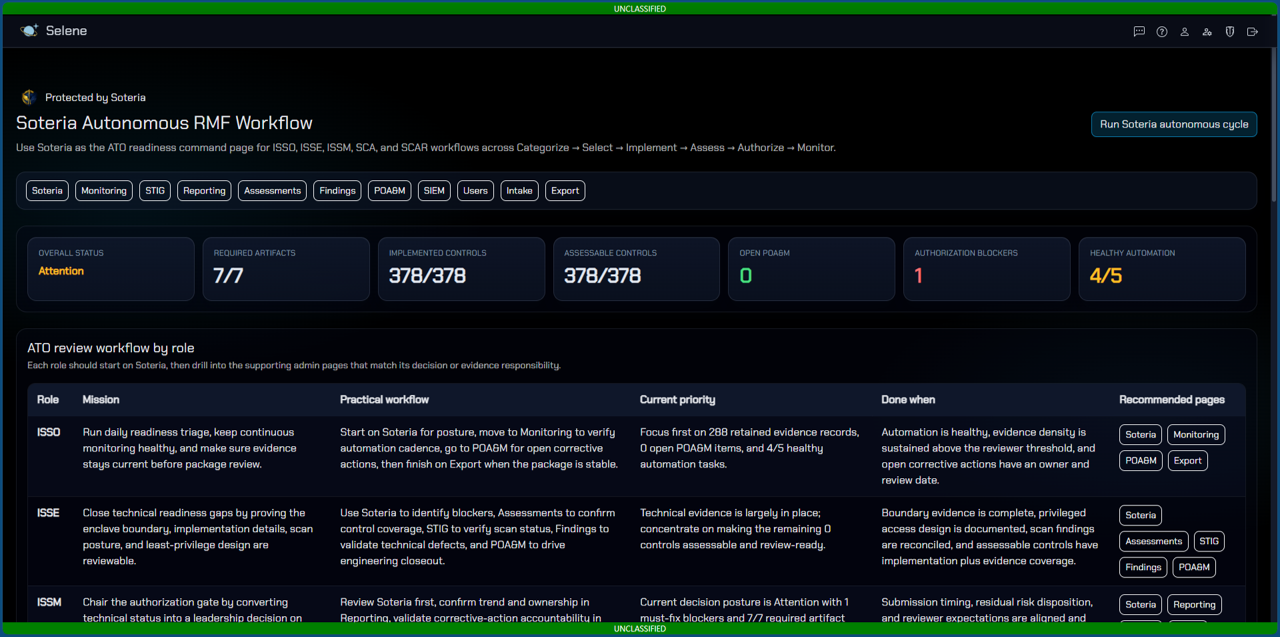
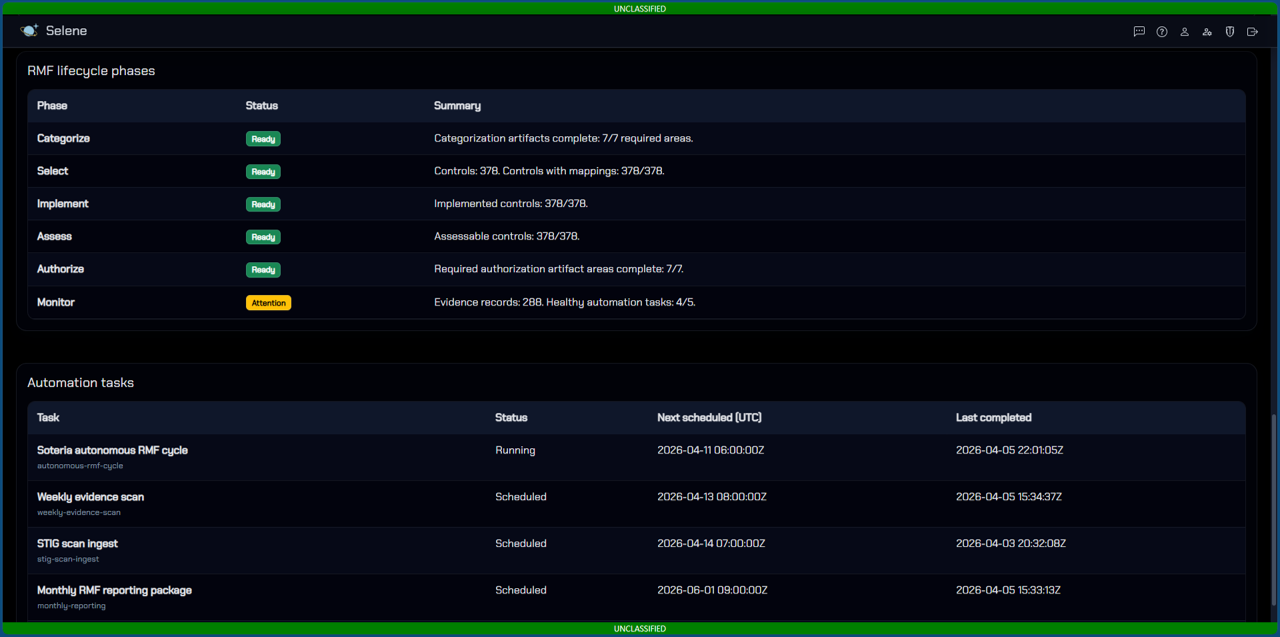
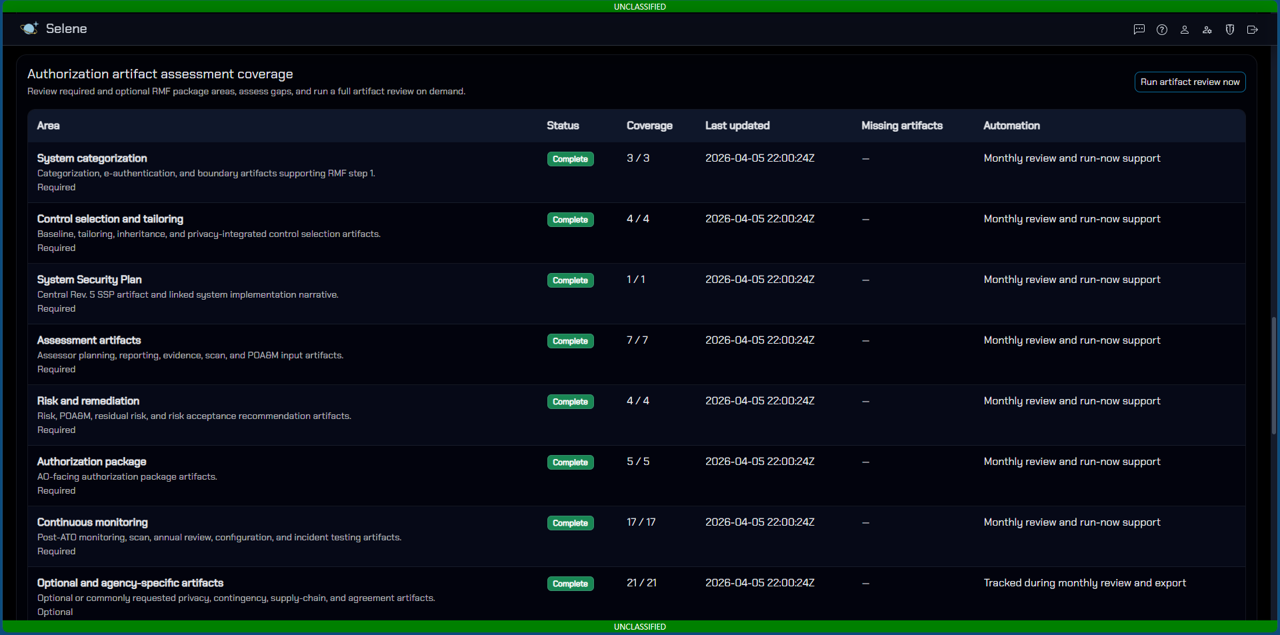
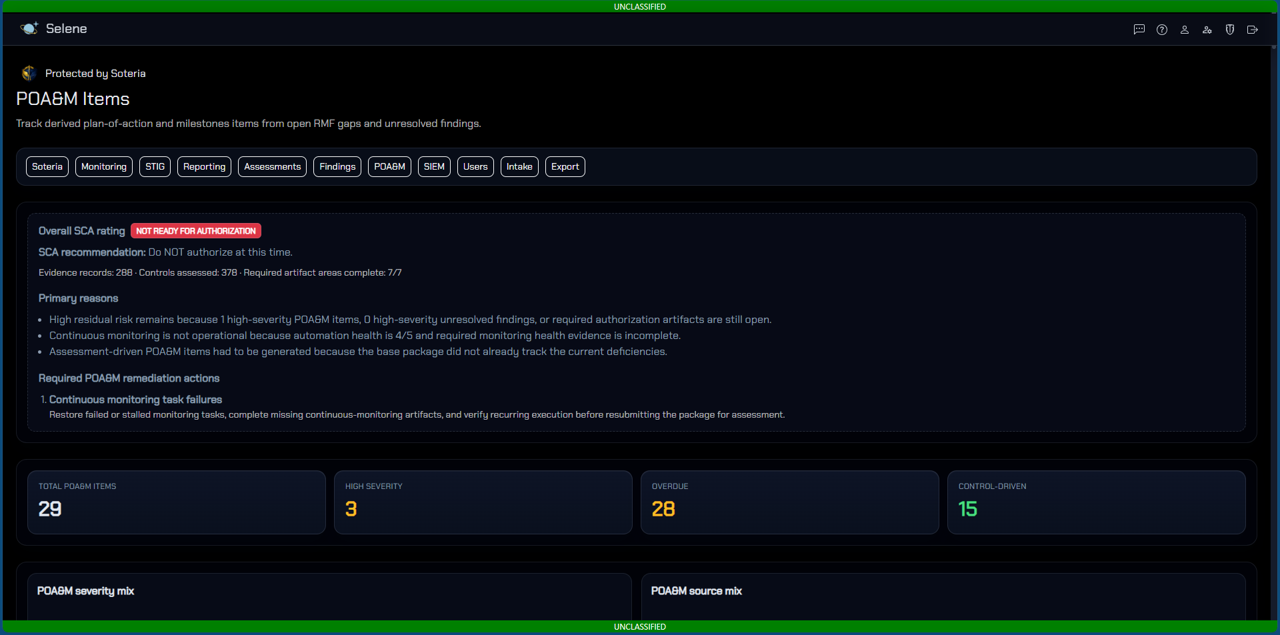
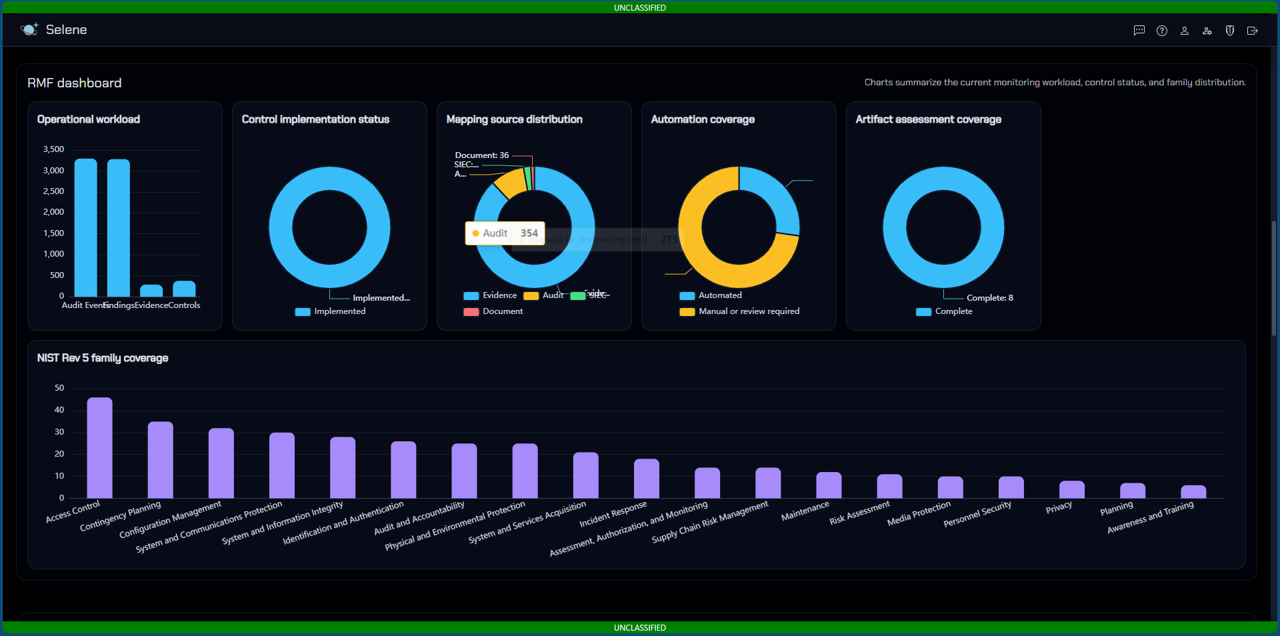
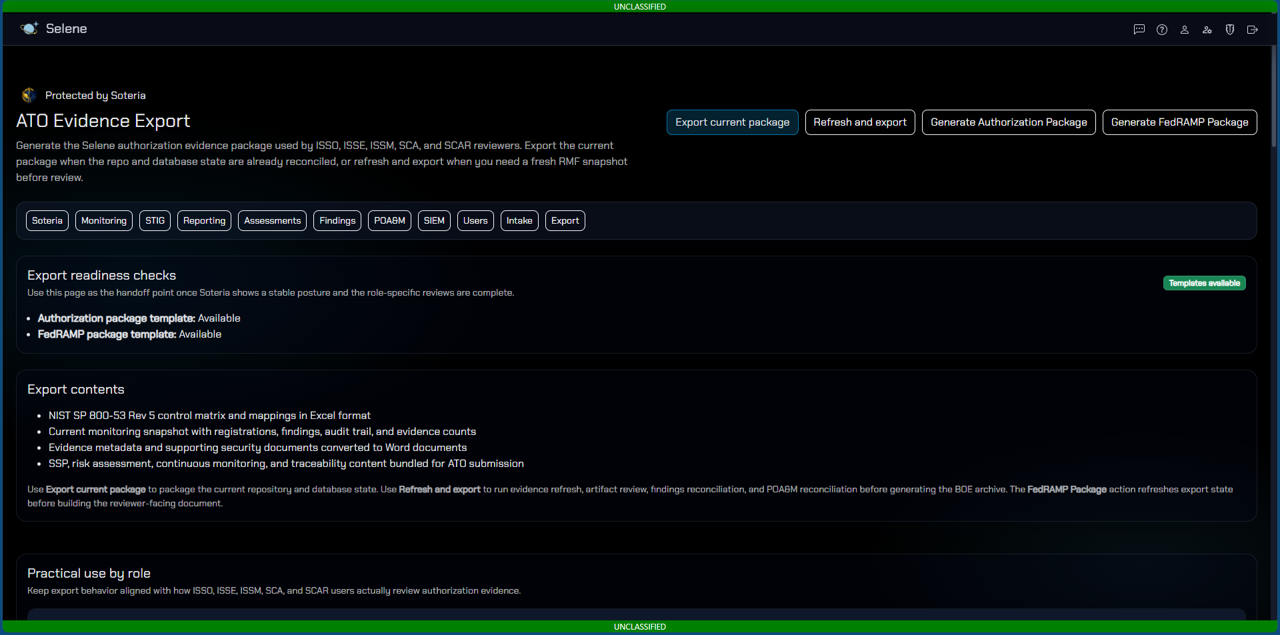
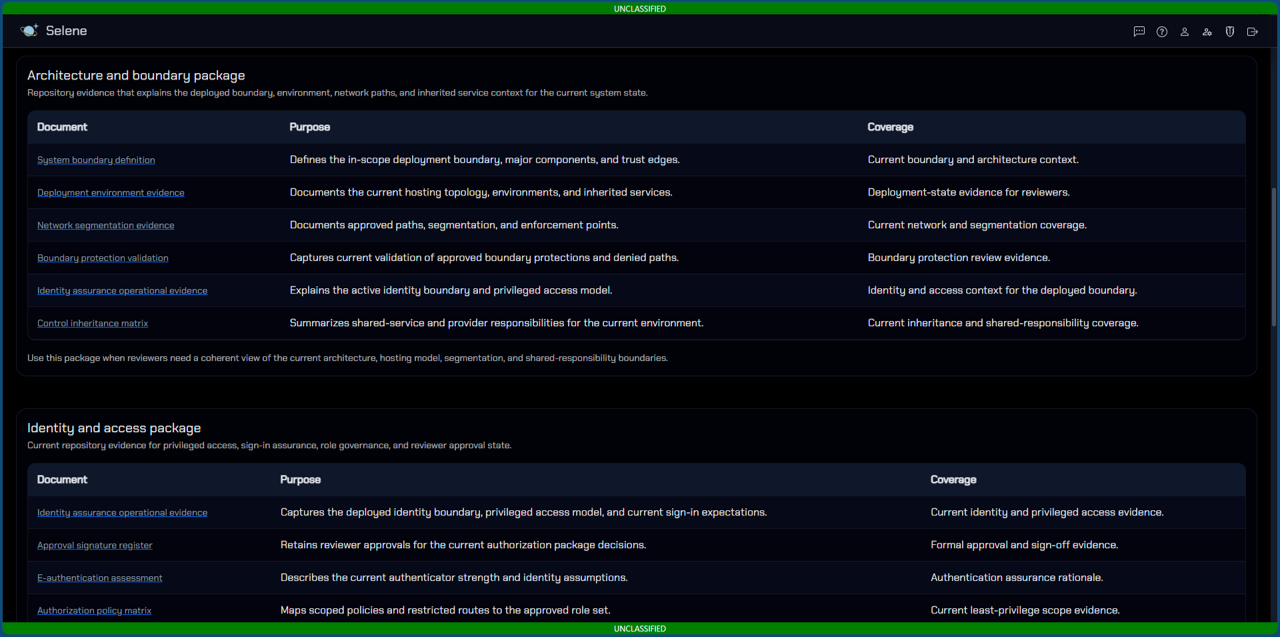
Soteria is a compliance intelligence engine designed to automate, validate, and continuously monitor the full lifecycle of federal cybersecurity evidence. It sits at the intersection of RMF, DevSecOps, and automated assurance, turning what is normally a document‑driven burden into a data‑driven, machine‑verifiable workflow. At its core, Soteria does three things:
Soteria provides traceable, automated, evidence‑driven assurance from developer commit through production deployment and continuous monitoring — enabling faster, safer, and more defensible Authorization to Operate (ATO) decisions.
-
Automates Evidence Acquisition
-
Performs Machine‑Reasoned Control Evaluation
-
Maintains Continuous Authorization State
Automates Evidence Acquisition
Soteria ingests and normalizes compliance artifacts from any source:
-
STIG Viewer outputs
-
SCAP/OVAL results
-
Cloud configuration baseline
-
CI/CD pipeline scans
-
Manual artifacts (PDF, XLSX, DOCX)
-
API‑level telemetry from deployed systems
Every artifact is converted into a structured, queryable evidence object with provenance, timestamps, and cryptographic integrity markers.
Performs Machine‑Reasoned Control Evaluation
Instead of human‑driven checklist review, Soteria applies:
- Control‑to‑evidence mapping
- Automated pass/fail scoring
- Gap detection
- Control inheritance resolution
- Cross‑artifact correlation
- Risk‑weighted prioritization
This produces an objective, repeatable, audit‑ready assessment that aligns with NIST 800‑53 Rev 5, FedRAMP, DoD CC SRG, and agency‑specific overlays.
Maintains Continuous Authorization State
Soteria acts as the guardian of the system’s authorization posture:
-
Tracks drift from approved baselines
-
Detects evidence expiration
-
Monitors configuration changes
-
Generates real‑time POA&M updates
-
Produces continuous monitoring dashboards
-
Supports automated ATO renewal workflow
Soteria vs. Legacy RMF Tools
1. Evidence Handling
Legacy RMF Tools
- Treat evidence as documents (PDFs, spreadsheets, screenshots).
- Require manual upload, manual tagging, and manual review.
- No normalization, provenance, or cryptographic integrity.
- Evidence becomes stale unless humans update it.
Soteria
- Treats evidence as data objects, not documents.
- Automatically ingests STIGs, SCAP/OVAL, cloud baselines, CI/CD scans, and telemetry.
- Normalizes everything into a structured, queryable evidence graph.
- Tracks provenance, timestamps, expiration, and drift automatically.
Impact: Soteria eliminates the human bottleneck and turns evidence into a living dataset.
2. Control Evaluation
Legacy RMF Tools
- Checklist‑driven.
- Human interpretation required for every control.
- No automated scoring or correlation.
- Inconsistent results across assessors.
Soteria
- Machine‑reasoned control evaluation.
- Automated pass/fail scoring using control‑to‑evidence mapping.
- Cross‑artifact correlation (e.g., STIG + cloud baseline + pipeline scan).
- Risk‑weighted prioritization and inheritance resolution.
Impact: Soteria produces objective, repeatable, audit‑ready control outcomes.
3. Continuous Monitoring
Legacy RMF Tools
- “Continuous monitoring” means periodic manual review.
- Evidence expiration is not tracked.
- No real‑time drift detection.
- POA&M updates require human intervention.
Soteria
- Real‑time drift detection from baselines.
- Evidence expiration alerts and automated refresh.
- Continuous POA&M generation and updates.
- Live dashboards showing authorization posture.
Impact: Soteria shifts organizations from ATO as an event to ATO as a state.
4. Integration & Automation
Legacy RMF Tools
- Limited or no API integration.
- Not designed for DevSecOps pipelines.
- Manual data entry dominates workflows.
- No automated RMF lifecycle execution.
Soteria
- Full API‑driven ingestion and dispatch.
- Integrates with CI/CD, cloud APIs, telemetry feeds, and STIG/SCAP pipelines.
- Automated RMF lifecycle (Categorize → Monitor).
- Outbox‑pattern dispatch ensures reliability and auditability.
Impact: Soteria becomes part of the software factory, not a separate compliance chore.
5. Auditability & Transparency
Legacy RMF Tools
- Evidence trails are opaque.
- Failures, retries, and dispatch history are not tracked.
- Auditors rely on screenshots and narrative justification.
Soteria
- Every evidence object has a full audit trail.
- Dispatches, retries, failures, and results are persisted.
- Auditors can verify integrity and provenance instantly.
Impact: Soteria provides machine‑verifiable assurance, not narrative justification.
6. Mission Fit
Legacy RMF Tools
- Built for document management.
- Not designed for modern cloud, DevSecOps, or telemetry‑rich systems.
- Reactive, slow, and labor‑intensive.
Soteria
- Built for data‑driven, automated, continuous authorization.
- Designed for modern cloud, pipelines, and telemetry ecosystems.
- Enables high‑tempo missions and rapid fielding.
Impact: Soteria aligns with the speed and complexity of modern federal systems.