The Gap Legacy Tools Left Open
Federal programs increasingly demand:
But legacy SCA tools were built for enterprise IT, not for mission-critical experimental software. They flag vulnerabilities. They do not map code behavior to control frameworks. They do not generate compliance evidence. They do not understand the difference between a security finding and an RMF-relevant finding.
Vanguard fills that gap. It is the first SCA engine designed specifically for federal R&D, prototyping, and high-consequence software development.
"RMF-First static analysis. Annotation-driven control mapping. Mission-context rule enforcement. Automated evidence export. Federal-grade traceability."
Legacy SCA tools were built for enterprise IT, not mission-critical experimental software. Vanguard fills that gap. Vanguard is built specifically for federal programs and high-consequence software development.
Mapped to NIST SP 800-53 Rev5
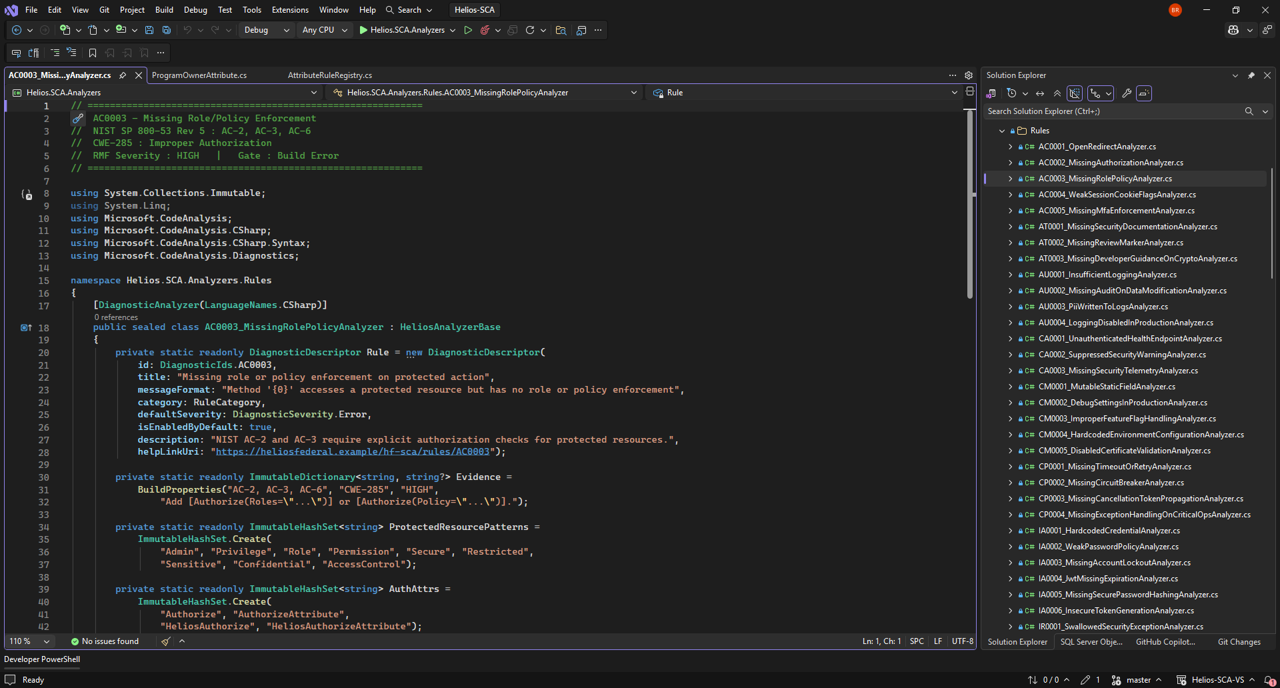
Vanguard evaluates code against NIST SP 800-53 Rev5 control families. Each rule is tied to a specific control family, a control enhancement, and a mission-relevant rationale. This creates ATO-ready evidence automatically as developers write code.
Each rule maps to a specific NIST 800-53 control family.
Each rule maps to a specific enhancement within the family.
Each rule includes a mission-relevant rationale, not just a compliance reference.
Security Context in the Code
Annotation-Driven Architecture Mapping
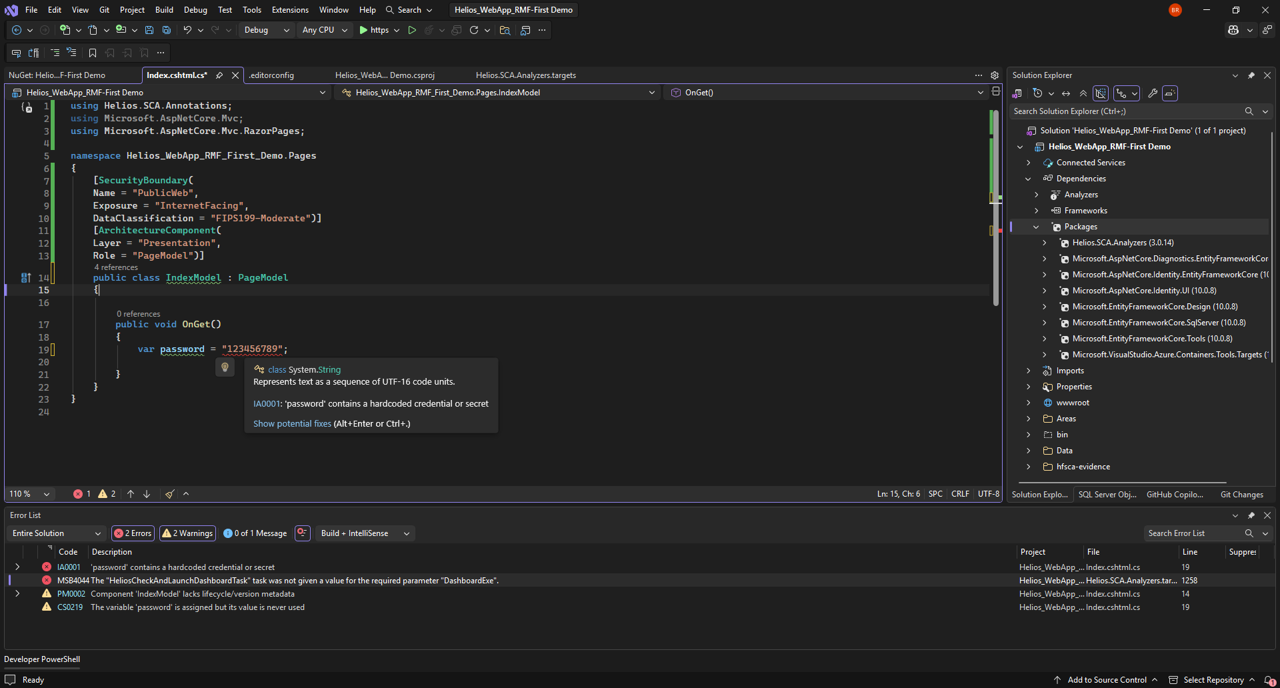
Vanguard introduces a federal-grade annotation model that allows developers to declare security context directly in code. These annotations become analysis inputs, RMF evidence, traceability artifacts, and dashboard-visible metadata simultaneously.
Security perimeter declarations
Data sensitivity levels
Authentication requirements
Supply-chain dependencies
Build-run provenance
Compliance event markers
Configuration management items
These annotations become:
Five Language Ecosystems
Multi-Language Analysis Pipeline
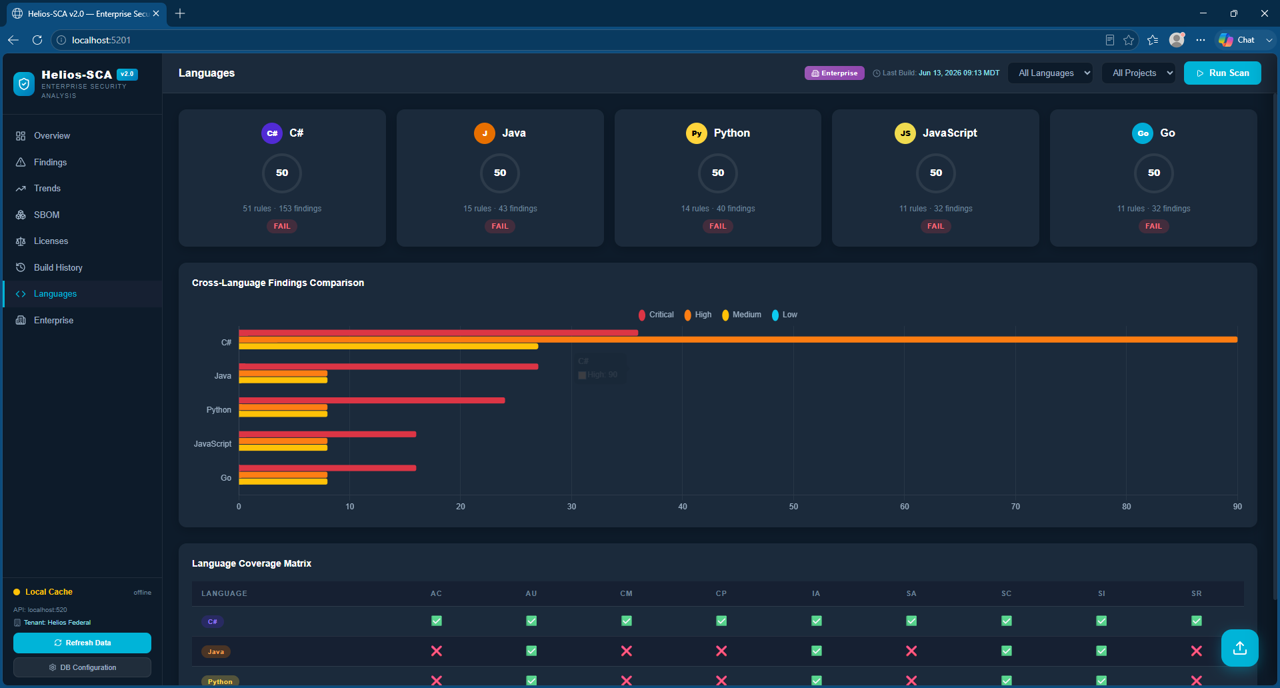
Vanguard supports codebases across five language ecosystems. Each integration uses language-native tooling with a unified output layer mapping all findings to the same NIST control taxonomy.
C# / .NET
Native Roslyn analyzers
Python
Bandit integration
JavaScript / TypeScript
ESLint security rules
Go
gosec
Java
Semgrep-based rulesets
Each language integration produces findings mapped to the same NIST 800-53 control taxonomy. The output format is language-agnostic. The evidence is consistent across the entire codebase regardless of language mix.
Single Pane of Glass
Vanguard Dashboard
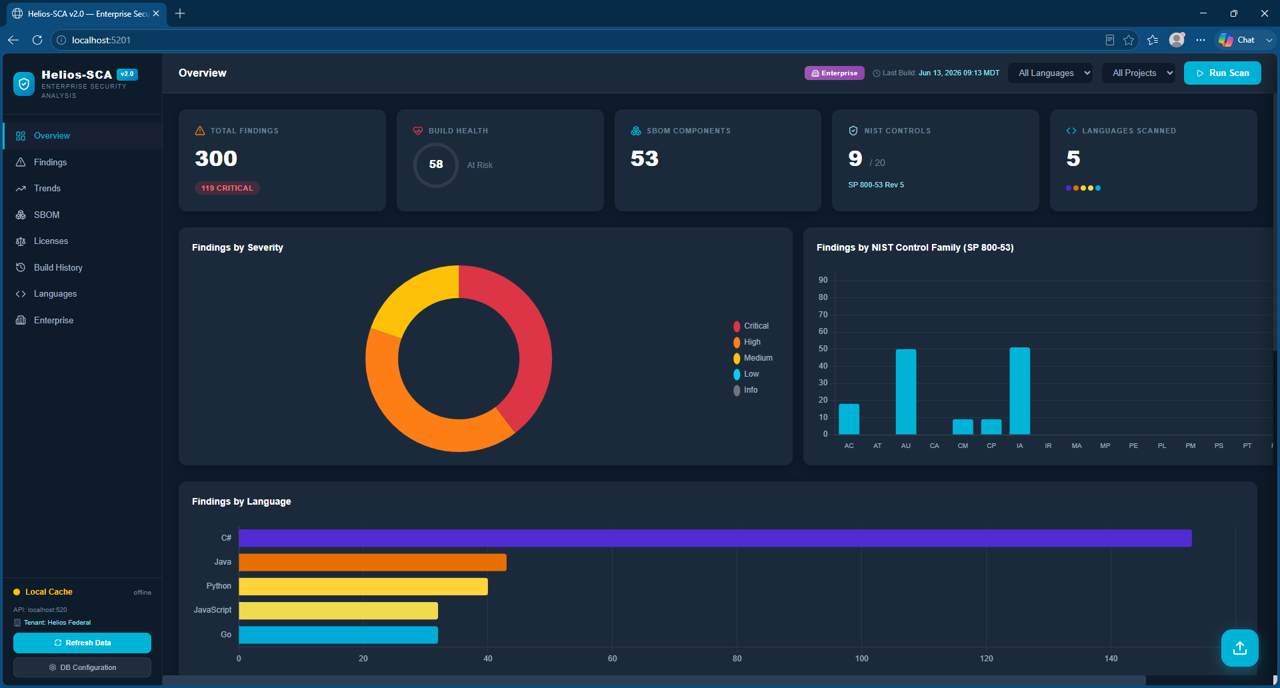
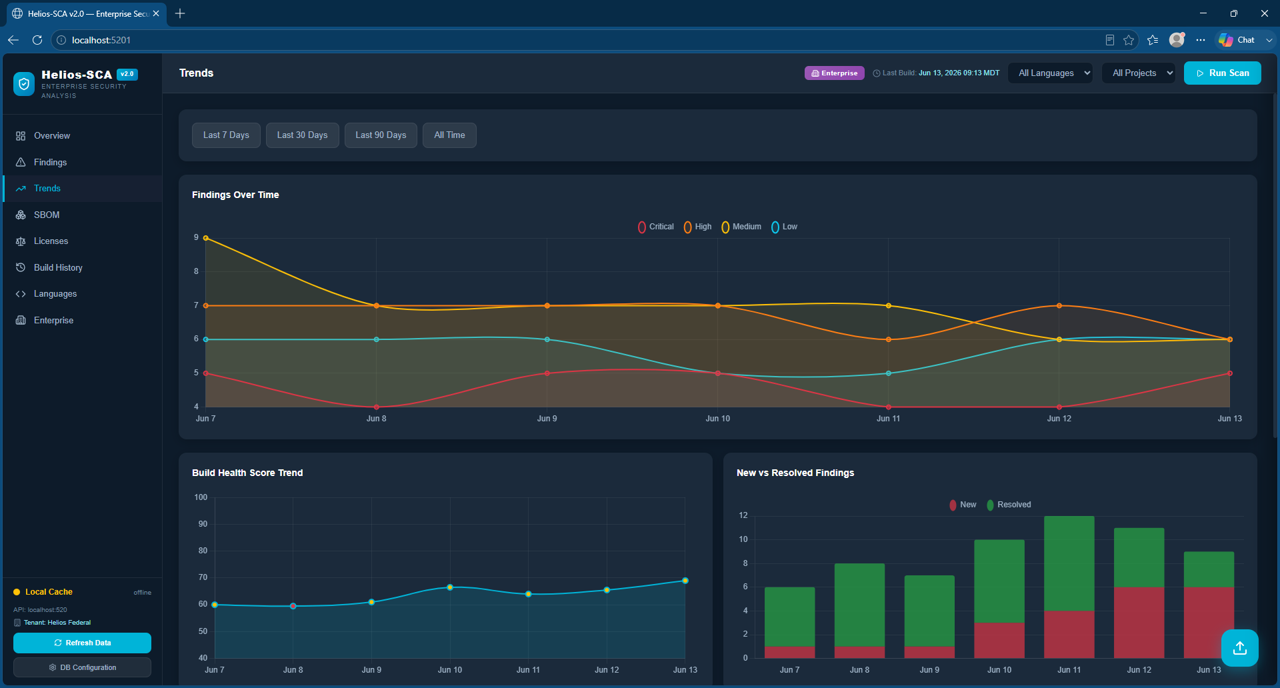
The companion dashboard is designed for engineering leads, ISSOs, and ATO teams. Three audiences who need to see the same data in different contexts.
Real-Time Rule Violations
Live feed of analysis findings as they occur during builds.
RMF Coverage Heatmaps
Visual mapping of NIST SP 800-53 control family coverage across the codebase.
Annotation Completeness Scoring
Per-module scoring of annotation completeness. Incomplete annotation is surfaced as an ATO risk.
Supply-Chain Risk Indicators
Continuous monitoring of dependency provenance, license compliance, and known-vulnerability exposure.
Build-to-Build Drift Analysis
Comparison of RMF control coverage and rule violation profile across consecutive builds.
Evidence Export History
Complete record of all evidence packages generated, with timestamps and build identifiers.
Vanguard surfaces findings inline in the IDE, not just in a dashboard. Engineering discipline encoded at the point of writing, not discovered at review.
Every Scan Produces a Complete Package
Automated Evidence Export
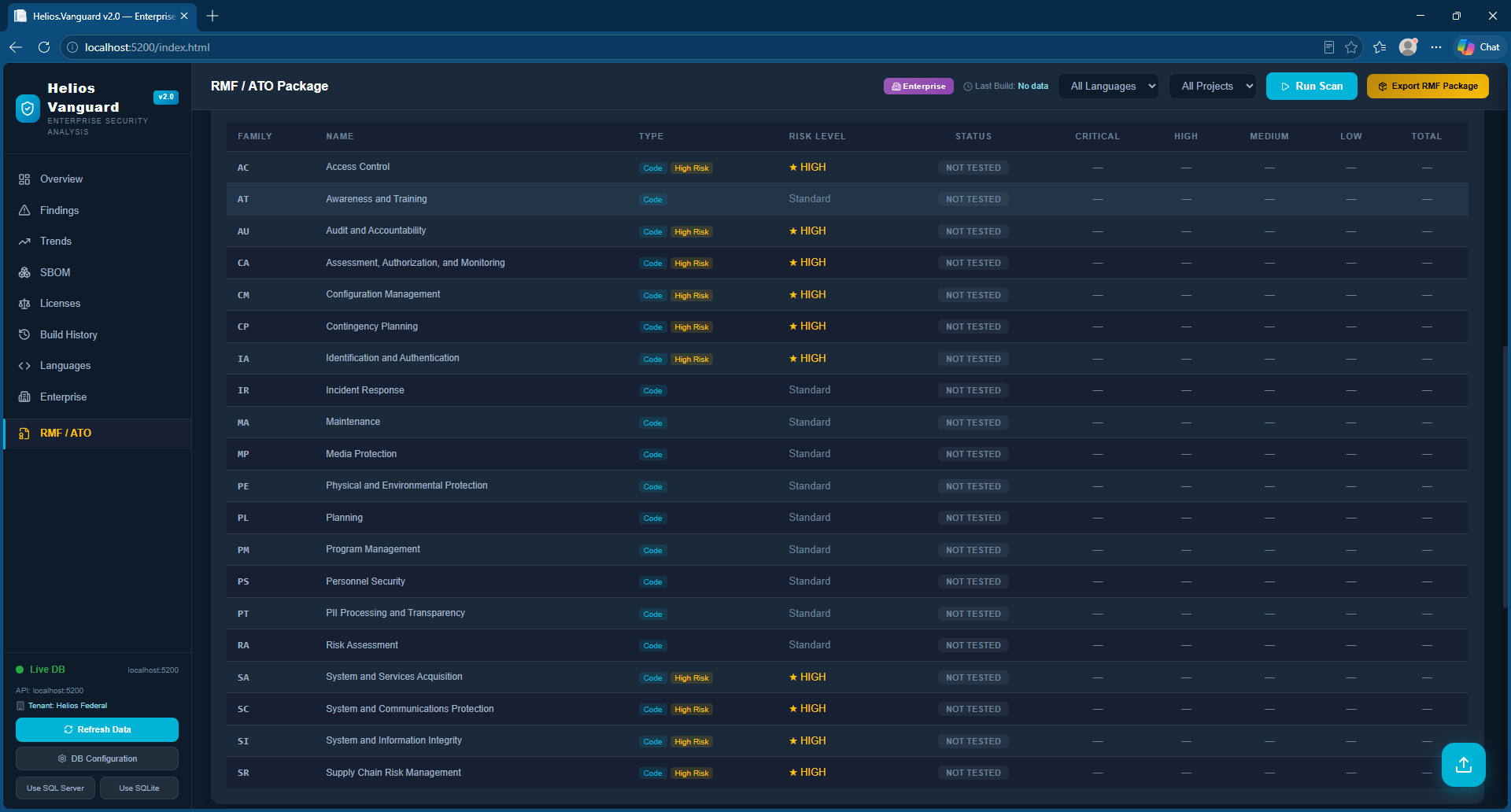
Every Vanguard scan produces a complete evidence package ready for ATO workflows.
Vanguard does not add compliance to the end of the development process. Every line of code analyzed generates evidence. When the formal ATO process begins, the evidence package exists, built continuously during development, not reconstructed before the audit.
What We're Still Working Out
These are honest open questions, not answered by the current implementation.
"At what level of annotation completeness does a codebase produce ATO evidence that meaningfully reduces formal audit scope?"
// Active area of development.
"Can Vanguard's control family coverage extend reliably to PL and PM families, or are planning and program management resistant to automated static analysis?"
// Partially addressed. The boundary is not yet well-characterized.
"How does Vanguard perform on AI-generated code? Do annotations survive AI-assisted refactoring?"
// Emerging priority. Untested at scale.
"Can the evidence-first architecture extend to runtime analysis generating evidence from running systems, not just static code?"
// Soteria (EXP-002) is exploring this. Integration is a design question.